
PW Developments — Uluwatu has become an attractive destination for property investors seeking exposure to Bali’s tourism and hospitality market. Its coastal scenery, limestone cliffs, surf spots, and lifestyle appeal can make a villa an appealing proposition.
However, a property’s visual appeal is only one part of the investment equation.
Before committing capital, investors should examine the infrastructure that supports the property: road access, water supply, electricity, drainage, internet connectivity, parking, and the movement of guests and service providers.
These factors may not be as visible as an ocean view or an architectural design, but they can have a direct influence on operating expenses, guest satisfaction, maintenance requirements, rental performance, and the property’s long-term marketability.
A villa may look exceptional in a brochure yet become more expensive to operate if it depends on costly water deliveries, requires frequent equipment repairs, or is difficult for guests and service vehicles to access.
For investors considering Uluwatu property investment, infrastructure due diligence should therefore be treated as part of the financial assessment—not as a technical detail to address after the purchase.
…
1. Understand the Infrastructure of the Specific Micro-Location
Uluwatu is not one uniform property market. As discussed in the first article of this series, its neighbourhoods and micro-locations can differ in accessibility, surrounding development, guest demand, and property characteristics.
Infrastructure conditions can also vary from one property to another, including between properties located within the same general area.
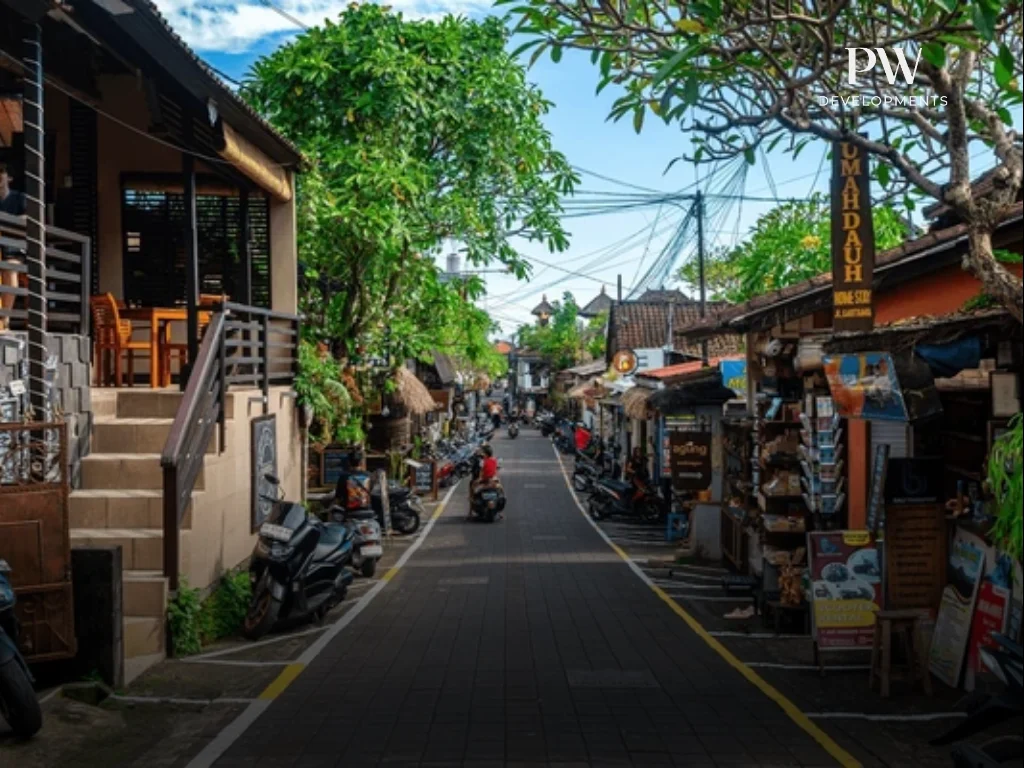
A villa near a main road may have different access requirements from one reached through a narrow local lane. A property with a direct and reliable utility connection may have a different cost profile from one that requires additional storage, pumping, or backup systems.
Investors should avoid relying on broad statements such as “the area is developing quickly” or “infrastructure will improve soon” without verifying the conditions relevant to the exact property.
Badung Regency’s spatial planning framework, established through Regional Regulation No. 4 of 2025 on the 2025–2045 Regional Spatial Plan, provides wider planning context for development in the regency.
It does not, by itself, establish that a particular property’s utilities, road access, or drainage are adequate.
Official reference: Badung Regency Regulation No. 4 of 2025 — Regional Spatial Plan 2025–2045.
The practical lesson is simple: regional infrastructure plans provide context, but investors still need property-level verification.
…
2. Water Supply: Ask Where the Water Comes From
For a villa, reliable water supply is one of the most important infrastructure considerations.
Water is needed for showers, kitchens, laundry, cleaning, swimming pools, landscaping, and other daily operations. If the supply is unreliable, the consequences can extend beyond inconvenience. Additional storage, pumping, treatment, maintenance, or water deliveries may increase operating costs and complicate property management.
Investors should begin with a direct question:
Where does the property’s water come from, and how reliable is that supply throughout the year?
The answer should be supported by evidence rather than assumptions.
During due diligence, verify:
- Whether the property is connected to a piped water supply or relies on another source.
- Whether the supply is consistent during periods of high demand or dry weather.
- Whether storage tanks and pumps are appropriately sized for the villa’s occupancy and guest capacity.
- Whether water treatment or filtration is required.
- Whether water quality is tested and suitable for its intended uses.
- How much water costs under normal operating conditions.
- Whether the property has a documented contingency plan for interruptions.
Do not assume that two nearby villas have identical water access simply because they are located in the same neighbourhood.
Water availability is also a wider infrastructure issue in Bali. The provincial public works and housing infrastructure agency has discussed plans to strengthen drinking-water supply systems, while Indonesia’s Ministry of Public Works has acknowledged water-supply challenges in densely populated areas of Java and Bali.
Sources:
- Bali Provincial Government — Water Supply and Infrastructure Planning
- Indonesia Ministry of Public Works — Improving Access to Clean Water
These sources provide regional context, not proof that a particular Uluwatu property has an inadequate supply. The actual source, reliability, quality, and cost must be checked for each asset.
…

3. Road Access: More Than a Question of Convenience
Road access can affect both the guest experience and the daily operation of a rental property.
A villa may be relatively close to a beach or popular destination in straight-line distance, yet still be difficult to reach because of narrow roads, poor surfaces, steep approaches, limited turning space, or traffic congestion.
For guests arriving with luggage, families travelling with children, or visitors unfamiliar with the area, access conditions can influence how convenient the property feels.
Access also matters to the people who keep the villa running. Housekeeping teams, maintenance contractors, laundry services, suppliers, waste collection, and emergency services all need practical access.
During a site inspection, assess:
- The condition and width of the access road.
- Whether cars can reach the property comfortably.
- Whether larger vehicles, delivery vans, or emergency vehicles can reach it where required.
- Whether the final approach includes steep slopes, tight turns, or difficult manoeuvres.
- Whether the access is legally established and documented.
- Whether any part of the route depends on private land or informal arrangements.
- Whether road conditions deteriorate during heavy rain.
- Whether parking and drop-off arrangements are sufficient for the property’s intended capacity.
Legal access and practical access are related, but they are not the same thing. A route may be physically usable without providing the legal certainty an investor requires. Both should be verified.
Investors should also distinguish existing road conditions from promised future improvements. A proposed road upgrade should not be treated as an established benefit unless its status, timing, and relevance to the property can be substantiated.
…
4. Electricity: Assess Reliability, Capacity, and Backup Requirements
Electricity supports nearly every part of a modern villa operation, including air conditioning, water pumps, refrigeration, lighting, internet equipment, security systems, laundry appliances, and pool equipment.
The consequences of a power interruption depend on the property and its systems. A brief outage may be manageable, while a longer interruption can disrupt guest comfort, food storage, water supply, communications, and other essential functions.
Investors should ask whether the property’s electrical capacity is appropriate for its intended use.
A villa designed for occasional private use may have different requirements from a larger property with several bedrooms, multiple air-conditioning units, a pool, and frequent guest turnover.
Check the installed capacity, the condition of the electrical system, the suitability of the distribution board, and the maintenance history. Where appropriate, obtain an assessment from a qualified electrical professional.
If the investment depends on backup power, include the full cost in the financial model. This may involve equipment purchase, installation, fuel or charging costs, servicing, replacement, and periodic testing.
A backup system should not be treated as a free solution to unreliable infrastructure. It is an asset with its own operating requirements and lifecycle costs.
For a property intended to operate as short-term accommodation, investors should also understand how power interruptions would be handled and communicated to guests.
…

5. Drainage & Rainwater Management: Consider the Property Beyond the Dry Season
Drainage is easy to overlook when a property is inspected during sunny weather. Yet rainwater management can affect access, landscaping, building maintenance, and the usability of outdoor areas.
Poorly managed runoff may contribute to standing water, erosion, dampness, damage to external surfaces, or repeated maintenance work. The severity of these risks depends on the site’s topography, soil conditions, surrounding development, drainage infrastructure, and construction quality.
In Uluwatu, where properties may occupy sloping or uneven sites, investors should assess how rainwater moves through and around the land rather than looking only at the finished building.
Questions worth asking include:
- Where does rainwater flow during heavy rainfall?
- Is the property’s drainage connected to an appropriate system?
- Are drains clear, accessible, and adequately maintained?
- Does water flow onto the property from neighbouring land or higher ground?
- Are retaining structures, slopes, and outdoor surfaces in suitable condition?
- Is there evidence of erosion, water pooling, dampness, or previous water damage?
- Who is responsible for maintaining drainage infrastructure outside the property’s boundary?
A visual inspection may not be enough to establish whether a drainage system is adequate. If the site has steep slopes, visible erosion, signs of water damage, or complex retaining structures, consider obtaining an assessment from a qualified civil or structural professional.
The cost of preventive assessment should be compared with the potential cost of repeated repairs, disruption, and damage to the property.
…
6. Internet Connectivity: An Operating Requirement, Not a Luxury
Reliable internet connectivity has become an important consideration for many hospitality properties.
Guests may rely on internet access for work, video calls, navigation, entertainment, and communication. Property managers may also depend on connectivity for booking systems, guest messaging, smart locks, security equipment, payment processing, and remote monitoring.
However, advertised coverage in a general area does not necessarily guarantee reliable service inside a particular villa.
Before investing, test connectivity at the property itself. Check download and upload speeds, latency where relevant, signal stability, and coverage in bedrooms, living areas, workspaces, and outdoor areas where connectivity is expected.
Ask which providers can serve the property and whether the connection uses fibre, fixed wireless, or mobile data. Where business continuity is important, consider whether a secondary connection from a different network could provide useful redundancy.
The financial model should include installation, monthly subscription fees, equipment, and any backup connectivity required.
Internet quality can also influence how a property is positioned in the rental market. If remote workers or longer-stay guests are part of the target audience, connectivity should be assessed against those guests’ actual needs rather than a general claim that Wi-Fi is available.
…
7. Parking and Guest Mobility: Map the Entire Arrival Experience
A property’s location should be evaluated from the perspective of someone who has never visited it before.
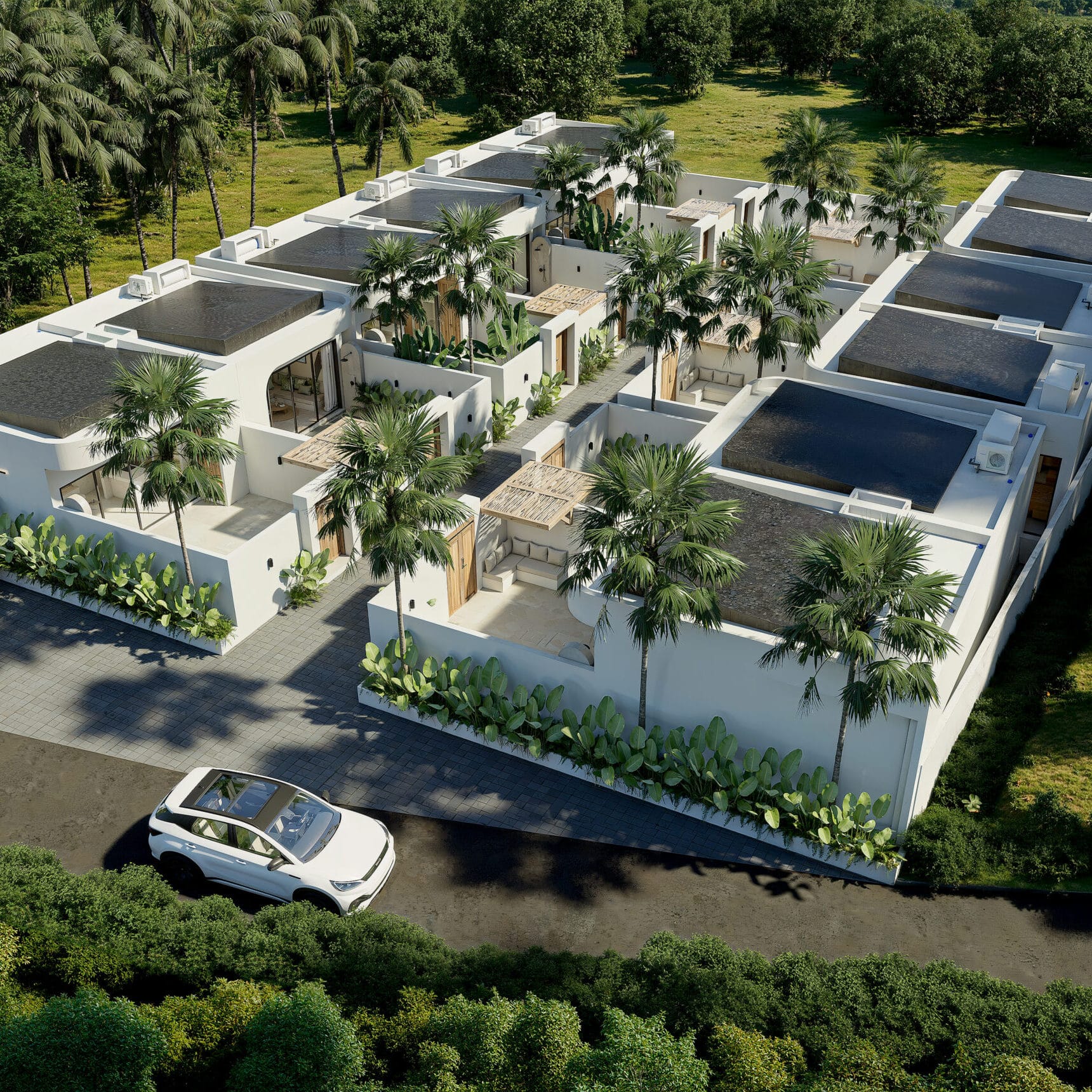
Consider the journey from the airport or main road to the villa, the final vehicle approach, the unloading of luggage, and the route from the parking area to the entrance.
A property may have limited parking, a difficult turning area, steps that are challenging with luggage, or a narrow approach that complicates transfers. These details may not prevent a purchase, but they should be understood before the investment decision.
Evaluate:
- The number of vehicles the property can accommodate.
- Whether parking is on-site, shared, or dependent on roadside space.
- Whether guests can unload luggage safely.
- Whether drivers and transfer vehicles can stop without obstructing access.
- Whether pedestrian routes are clear and adequately lit.
- Whether the approach is practical for the guest profile the property is intended to serve.
- Whether transport services can reach the property reliably.
Do not assume that every guest will rent a scooter or feel comfortable navigating unfamiliar roads independently.
For some properties, arranging transfers or providing clear arrival instructions may be sufficient. Others may require physical changes, a revised parking plan, or a different guest-access arrangement.
The correct response depends on the property’s positioning and the expectations of its target market.
…
8. Calculate How Infrastructure Affects Operating Costs
Infrastructure problems often affect investment performance through recurring expenses rather than one large, obvious cost.
A property may require additional water deliveries, pump repairs, backup power, internet redundancy, drainage maintenance, road-related vehicle arrangements, or more frequent repairs to external areas.
Each cost may appear manageable in isolation. Combined, however, they can reduce net operating income and make the original investment assumptions less reliable.
Consider an illustrative example in which a villa incurs additional infrastructure-related expenses:
| Expense category | Illustrative annual cost |
|---|---|
| Additional water supply and delivery | IDR 18 million |
| Pump and water-system maintenance | IDR 8 million |
| Backup power servicing and operating costs | IDR 12 million |
| Additional drainage and external-area maintenance | IDR 10 million |
| Secondary internet connection | IDR 6 million |
| Total additional annual expenses | IDR 54 million |
These figures are hypothetical examples, not estimates of typical Uluwatu operating costs. Actual expenses depend on the property, its systems, utility arrangements, usage, and service providers.
The example illustrates why infrastructure should be included in the operating budget before calculating net yield.
If the same property incurs IDR 54 million in additional annual expenses that were omitted from its original model, its annual net operating income would be IDR 54 million lower than projected, all else being equal.
Investors should also distinguish recurring expenses from one-time capital expenditure. Installing a water-storage system, upgrading electrical capacity, or correcting a drainage problem may require an upfront investment, while ongoing maintenance creates recurring costs. Both belong in the financial analysis, but they should be modelled separately.
For a more detailed discussion of rental income and operating expenses, refer to Article 5 in this series: Gross Yield vs Net Yield: What Bali Property Investors Should Really Calculate.
…

9. Infrastructure Can Influence Guest Experience and Rental Performance
Infrastructure does not determine rental performance on its own, but it can influence the quality and consistency of the guest experience.
Guests may not notice that a villa has well-designed drainage, correctly sized pumps, sufficient electrical capacity, or reliable access. They are more likely to notice the consequences when these systems fail.
Water interruptions, unreliable air conditioning, poor internet, difficult arrivals, or recurring maintenance problems can create friction during a stay. Depending on the circumstances, these issues may lead to complaints, additional service costs, compensation, or weaker reviews.
The investment implication is not that better infrastructure automatically produces higher occupancy. Rather, dependable infrastructure can help a property deliver the experience it promises and reduce avoidable operational disruption.
Investors should therefore evaluate infrastructure alongside the property’s design, pricing strategy, management capability, and target guest profile.
A strong investment model should not assume that attractive architecture and a desirable location will compensate for unresolved operational weaknesses.
…
10. Assess Infrastructure Resilience and Long-Term Maintenance
A property should be assessed not only on whether its infrastructure works today, but also on how it is likely to perform over time.
Investors should identify which systems are owned and maintained by the property, which depend on shared facilities, and which rely on public or third-party services.
For each critical system, establish:
- Its current condition and approximate age.
- The maintenance schedule and responsible party.
- The likely replacement cycle.
- The availability of spare parts and qualified technicians.
- The cost and feasibility of upgrades.
- The consequences of a service interruption.
- The existence of practical backup arrangements.
For example, a water-storage tank may reduce the impact of short supply interruptions, but its effectiveness depends on capacity, consumption, maintenance, and the reliability of the underlying source.
A backup internet connection may improve resilience, but only if it does not rely on the same network failure that affects the primary connection.
These details are especially important when forecasting long-term operating expenses and capital expenditure.
Investors should also review applicable planning requirements and obtain professional advice where drainage, retaining structures, water systems, or electrical upgrades involve technical or regulatory considerations.
…
11. A Practical Infrastructure Due Diligence Checklist
Before committing to a villa or land investment in Uluwatu, investors can use the following checklist.
Road access
- Confirm legal access and inspect the full route to the property.
- Assess road condition, width, slope, turning space, and vehicle access.
- Check parking, loading, and service-vehicle requirements.
Water supply
- Identify the actual source of water.
- Verify reliability, quality, capacity, and recurring cost.
- Inspect storage, pumps, treatment systems, and contingency arrangements.
Electricity
- Confirm available capacity and the condition of the installation.
- Assess the power requirements of the property’s intended operation.
- Include backup equipment and maintenance in the financial model where necessary.
Drainage
- Inspect the site during or after rainfall if practical.
- Identify runoff routes, drainage connections, and maintenance responsibilities.
- Investigate signs of erosion, pooling, dampness, or water damage.
Internet
- Test service at the property rather than relying solely on advertised coverage.
- Confirm available providers, installation costs, speed, and reliability.
- Assess whether a backup connection is justified.
Parking and mobility
- Review guest arrival, luggage handling, parking, and vehicle access.
- Confirm that the arrangement suits the property’s intended guest profile.
- Identify any additional transport or access costs.
Financial and technical review
- Separate recurring operating expenses from capital expenditure.
- Request utility bills, maintenance records, and available technical documentation.
- Obtain qualified inspections where material risks are identified.
- Update the investment model using verified costs and realistic contingencies.
A property does not need to have perfect infrastructure to be investable. However, investors should understand the limitations, quantify the likely costs, and determine whether the risks are acceptable before committing capital.
…

Final Thoughts
Uluwatu’s landscape can make a property attractive, but the long-term investment case depends on more than its view, design, or proximity to the coast.
Road access, water supply, electricity, drainage, internet connectivity, parking, and guest mobility all contribute to the property’s operating conditions. Their quality can affect maintenance requirements, operating costs, guest experience, and the consistency with which the property can be managed.
The most important questions are often practical:
Where does the water come from? Can guests and service vehicles reach the property easily? Is the electrical system adequate for the intended operation? How is rainwater managed? Will the internet support the expected guest experience? What will it cost to maintain these systems over time?
These questions should be answered before the investment model is finalised, not after operational problems appear.
At PW Developments (Pillai Ward), our investor-education approach is built around evaluating the full context of a property opportunity. Location and design matter, but they should be assessed alongside infrastructure, legal considerations, operating economics, and long-term asset management.
A compelling view may attract attention. Reliable infrastructure helps support the property behind it.
— Published by Marketing Team of Pillai Ward
Bali Provincial Government — Water Supply and Infrastructure Planning — konteks program pengembangan sistem penyediaan air minum di Bali.
Indonesia Ministry of Public Works — Improving Access to Clean Water — konteks tantangan penyediaan air bersih di wilayah padat penduduk, termasuk Bali.
Bali Provincial Spatial Planning — Water Resources Network Plan — peta jaringan sumber daya air dalam RTRW Provinsi Bali 2023–2043.
Badung Regency Regulation No. 4 of 2025 — kerangka tata ruang Kabupaten Badung 2025–2045.
Badung Regency in Figures 2025 — BPS — publikasi statistik resmi Kabupaten Badung yang dapat menjadi titik awal untuk mencari data infrastruktur dan kondisi wilayah.
~Thank you.